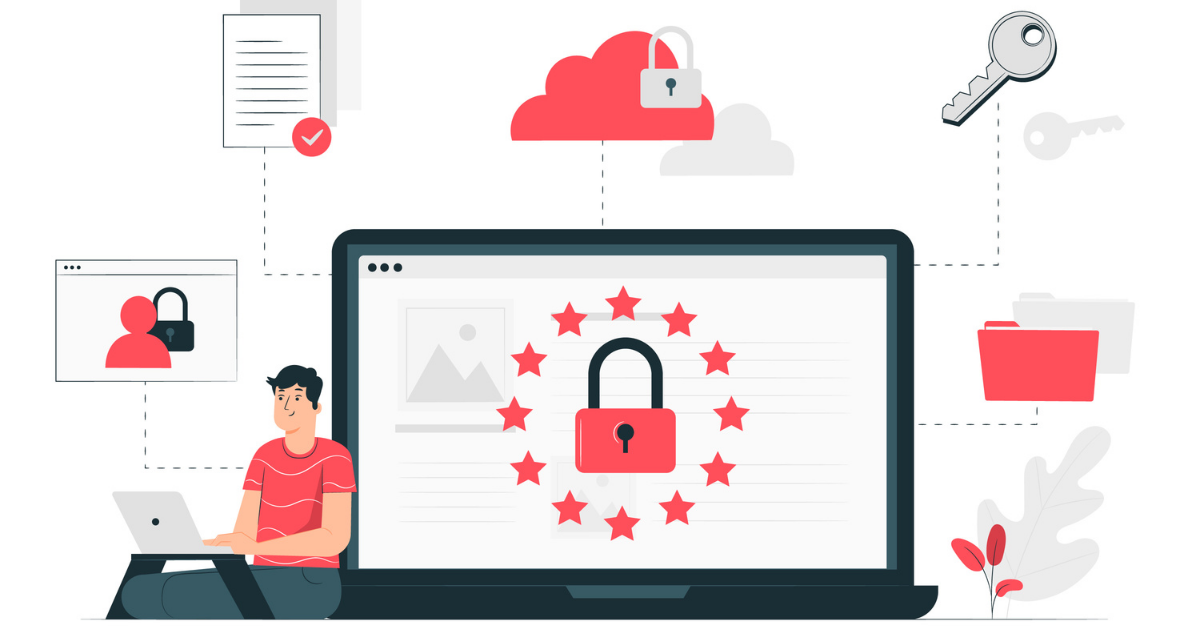
endpoint security solution

What Is Endpoint Security And Why Should an Enterprise Consider Opting It

The globe advancing towards technological development has driven businesses to greater innovation, efficiency, and growth. The use of network endpoints in all business activities and operations has been the single most important revolution in this digital era. The adaptation of electronic assets such as computers, smartphones, tablets, IoT devices, laptops, and point of sale (POS) terminals that are connected to the business network is known as network endpoints. It has had a colossal contribution in an assortment of benefits to businesses of all sizes, types, and backgrounds.

On one hand, technological advancement has accomplished unprecedented evolution from Artificial Intelligence (AI) to automatic machines. On the other hand, the same advancements have given birth to malicious actors developing viruses and technologies that endanger security solutions and breach the data protected in your systems. The immeasurable benefits of integrating network endpoints in businesses, also open the door for equally malicious challenges of cyber-security risks and attacks. 

What Is Endpoint Security?

 Endpoint security is the practice of securing endpoints or entry points of end-user devices such as desktops, laptops, and mobile devices from being exploited by malicious actors and campaigns. Endpoint security systems protect these endpoints on a network or in the cloud from cybersecurity threats. Endpoint security has evolved from traditional antivirus software to providing comprehensive protection from sophisticated malware and evolving zero-day threats that don’t match any previously known malware signatures.

 Enterprises of all sizes and types are in danger from the wrongdoings of hacktivists, and malignant experts, and unintentional insider dangers. Businesses today are defenseless without endpoint security that addresses one of the main loopholes in enterprise network calibration in business operations. As the volume and complexity of cyber security dangers have consistently grown, the requirement for expansive and developed endpoint security arrangements has increased tremendously. The present endpoint security solutions are intended to rapidly identify, break down, block, and contain assaults in progress in order to provide a strong shield against modern attacks.

Endpoint security widely differs from traditional network security options such as anti-virus protection software which solely focuses on perimeter protections and is rather weak in comparison to the viruses that are developed today. Business endpoint security aims to encompass security in many forms such as Mobile device management solutions (MDM), Endpoint Detection and Response (EDR), Virtual Private Networks (VPNs), Per-Endpoint Firewalls, etc. It features a centralized dashboard to administrate from and tackles the challenge of configuring the security solution from each individual asset which is the norm usually found in the consumer model of endpoint security. A single central server ensures consistency in the level of protection provided to each endpoint effortlessly thus, providing an improved and streamlined workflow and cybersecurity integration. 

Why Is Endpoint Security Important For An Enterprise?

 Data is one of the most crucial assets for any enterprise. Especially in today’s landscape where mining and acquiring data is costly and the competitive edge that acquired data provides is incomparable to any other qualitative and quantitative strengths a business possesses. Essentially, endpoints pose a prominent security risk because they have access to both the central server and the outside world. Due to which any flaw or gap in their security can lead to loss of crucial data from the server. Likewise, customers also want reassurance that the data they provide the companies with is protected. The company needs to meet those standards without any space for error to retain the trust and loyalty of their customers towards the company. The company cannot afford to lose the trust of their customers as the repercussions are not only financial loss but legal penalties from GDPR and CCPA regulation are also applicable. As a result, the practice of securing corporate networks with a robust endpoint security solution is of paramount necessity to protect endpoints or entry points of end-user devices from malicious actors and campaigns. 

Endpoint security solutions

 The key components of Endpoint security software are:

  • Centralized management of all network-connected endpoints for a simplified and concise platform that ensures flexibility and visibility.
  • Encryption of data and information transferred and collected in these endpoints to prevent a breach of data intentionally or unintentionally.
  • Firewall and web security to safeguard browsing on the web 
  • Detection of zero-day threats to warn the IT team beforehand and alert them from hostile network attacks.
  • Protection from insider threats to avoid malicious acts internally.
  • Improved anti-virus and anti-malware protection to instantly detect, correct, and avoid malware infiltration in multiple endpoints.
  • Avoid phishing and protect emails from viruses that target employees and their corporate-owned devices. 
  • Prevention of data loss by quickly detecting and isolating infections through machine learning.
  • Configuration of policies and protocols that are custom to the specific needs of a business which allows better security and access measures.
  • Remote installation and updating of security software which helps expand the life-cycle of said devices and improve workflow for employees.
  • Replaces ineffective anti-virus softwares and weak protection mechanisms that cost companies a large sum of money for loss of valuable data, resources, and time.

Today, cyber threats and attacks are becoming more and more sophisticated. Malignant actors are targeting and infiltrating businesses at a much larger rate as the value of data is increasing with technology being able to store monumental amounts of data in a single network. On top of that, 60% of cyberattacks originate from within the organization which poses incredible pressure on businesses to adopt advanced endpoint security to safeguard sensitive corporate data and valuable endpoint operations. The cyberattacks will continuously grow with time and the attack methods and tools will only grow complex and advanced. It is critical to strengthen the security position of any business now to gain as much advantage as possible from technological advancements and mitigate the challenges posed by it. 

Maxpcsecure is reliable endpoint security for any type of business that functions as a strong shield for all network endpoints by providing a flexible, user-friendly, and fully centralized platform that makes all your endpoints immune to vicious cyber-attacks.

Facebook, WhatApp, Instagram down worldwide

At the time of this writing, it is unclear if the outage is the result of a technical issue or it is the result of a cyber attack against the infrastructure of the social network giant. It’s October, the cyber-security awareness month.

Neither WhatsApp or Facebook have made it official that the outage was caused by a cyber attack. Thus, despite much speculation that the services were hacked, Facebook issued a public statement a couple of hours ago saying that the blackout was caused by a technical glitch and not by any state-funded actors.

But some twitter users who belong to the tech world confirm the reports and said that the chances for the app being targeted by hackers are plenty. Although many are happy that these platforms are down. Like Covid forced people to stay home and be close to family, outage of these platforms gives us time to be social in person instead of remote!!

Massive ransomware attack: Russia-linked REvil ransomware

Joe Biden orders probe of latest ransomware attack; Russia-linked REvil ransomware gang under the spotlight

US President Joe Biden said on Saturday he has directed U.S. intelligence agencies to investigate who was behind a sophisticated ransomware attack that hit hundreds of American businesses and led to suspicions of Russian gang involvement.

The hackers who struck on Friday hijacked widely used technology management software from a Miami-based supplier called Kaseya. They changed a Kaseya tool called VSA, used by companies that manage technology at smaller businesses. They then encrypted the files of those providers’ customers simultaneously.

A massive ransomware attack on the software supply chain has impacted more than 1,000 businesses so far, and the number may continue to grow. The attack has focused on managed service providers, which provide IT services primarily to small- and medium-sized businesses. Such attacks can have a multiplying effect, since the hackers may then gain access and infiltrate the MSPs’ customers too.

On Thursday, U.S. and British authorities said Russian spies accused of interfering in the 2016 U.S. presidential election have spent much of the past two years abusing virtual private networks (VPNs) to target hundreds of organizations worldwide.

On Friday, Russia’s embassy in Washington denied that charge.

Secure Work at home

Covid 19 related Phishing attacks :

During the current Corona crisis, the people are are at home more often. Adding to that, employees are working from home more than ever before. This presents itself as great breeding ground for cyber criminals.

Phishing attacks are setup in a way to send the victims to websites with fake information about the Coronavirus. Often times, these sites use the user’s system resources to earn cryptocurrency like Bitcoin – All without the approval of the user .

Ransomware :

Ransomware encrypts files on computers and ask the user for a ransom in return of the original files. The rise of a cryptocurrency like Bitcoin surely helped ransomware attacks, as it allows the malicious actor to be more anonymous. In 2021 and onwards, it’s possible to see more sophisticated attacks going on.

Top10 Cyber Security Threats in 2021

Emerging technologies such as cloud computing, Artificial Intelligence (AI), automation, and the Internet of Things (IoT) are creating unprecedented opportunities for businesses to unlock new value.

The shortage of skilled security personnel, complex compliance requirements, incessantly evolution of cyberattacks, and perilous insider threats continue to be the most prominent ongoing cybersecurity challenges

  1. The rush to cloud-everything will cause many security holes, challenges, misconfigurations and outages.
  2. More growth in the security industry. Our numbers of new products and new year mergers and acquisitions will cause network complexity issues and integration problems and overwhelm cyber teams.
  3. Privacy will be a mess, with user revolts, new laws, confusion and self-regulation failing.
  4. Identity and multi-factor authentication (MFA) will take center stage as passwords (finally) start to go away in a tipping-point year.
  5. Tons of high-profile Internet of Thing (IoT) hacks, some which will make headline news.
  6. Ransomware will get worse and worse — with new twists, data stealing prior to encryption, malware packaging with other threats and very specific targeting of organizations.
  7. Lots of 5G vulnerabilities will become headline news as the technology grows.
  8. Advanced Persistent Threats (APT) attacks will be widely available from criminal networks. The dark web will allow criminals to buy access into more sensitive corporate networks.
  9. Mobile devices, including smartphones, will be attacked in new ways, including app stores.
  10. Cryptocurrencies will play new roles, with criminals switching often for hiding advantages.

New ‘unremovable’ xHelper malware-Android devices

Named xHelper, this malware was first spotted back in March but slowly expanded to infect more than 32,000 devices by August (per Malwarebytes), eventually reaching a total of 45,000 infections this month (per Symantec).
The source of these infections is “web redirects” that send users to web pages hosting Android apps. These sites instruct users on how to side-load unofficial Android apps from outside the Play Store. Code hidden in these apps downloads the xHelper trojan. The trojan has shown intrusive popup ads and notification spam. The ads and notifications redirect users to the Play Store, where victims are asked to install other apps — a means through which the xHelper gang is making money from pay-per-install commissions.
Furthermore, even if users spot the xHelper service in the Android operating system’s Apps section, removing it doesn’t work, as the trojan reinstalls itself every time, even after users perform a factory reset of the entire device.
How xHelper survives factory resets is still a mystery

Google Android Malware Warning

android
Adware is a type of malware that hides on your device so it can serve you unwanted adverts, including scam ads. On top of this, adware-containing apps can drain battery resources, increase network traffic and gather your personal information. Here are the 21 apps affected by the adware.It goes without saying that if you have any of these installed, you should delete them now. They have been removed from Google playstore.
rogue

Global Cybersttacks and how to protect

Microsoft Reports Global Cyberattacks on Sporting and Anti-Doping Organizations from Russian Espionage ActorsMicrosoft Reports Global Cyberattacks on Sporting and Anti-Doping Organizations from Russian Espionage Actors

global

Original release date: October 29, 2019
Microsoft publicly released information revealing an uptick in cyberattacks globally targeting anti-doping authorities and sporting organizations. The Microsoft Threat Intelligence Center (MSTIC) routinely tracks malicious activity originating from the Russian advanced persistent threat (APT) group 28, also known as Fancy Bear, STRONTIUM, Swallowtail, Sofacy, Sednit, and Zebrocy. According to Microsoft, APT28 is targeting sporting and anti-doping organizations using spearphishing, password spraying (a brute force technique), fake Microsoft internet domains, as well as open-source and custom malware to exploit internet-connected devices.

To protect against similar attacks, Microsoft recommends:
• Enabling two-factor authentication on all business and personal email accounts,
• Learning how to spot phishing schemes and protect yourself from them, and
• Enabling security alerts about links and files from suspicious websites.

Hackers Can Manipulate Media Files Transferred via WhatsApp, Telegram

matrix-2503236_960_720

Hackers can manipulate media files transferred by users through the WhatsApp and Telegram messaging applications due to the way the Android operating system allows apps to access files in external storage. To minimize cyber risks it is essential that every user understand that they are both an asset and a potential security liability.

The attack works against WhatsApp in its default configuration and against Telegram if the user has enabled the “Save to gallery” option. Android Q will introduce a privacy feature called Scoped Storage, which changes how applications can access files on the device’s external storage.

New ransomware Sodinokibi

cyber-security-2296269_960_720

It assigns a random extension to each victim file typical of every ransomware. It is using a new delivery technique —distributed by malvertising that also directs victims to the RIG exploit kit. They are also using Spam or phishing emails.

Use Max Total Security to do a scheduled back up of your data regularly to ensure that data can be retrieved even after a successful ransomware attack. Be careful while opening mail attachments or mails you do not recognise.

Max Total Security pro actively looks for signs of Ransomware and stop as soon as they start. Also, offers free Backup utility included in the product for safe recovery. It also offers Folder Secure vault where you can keep your confidential data untouched by any malware including Ransomware.

Protect your data with Max Total Security. Also, our 24×7 highly skilled technical support team who can help you protect. Try Max Total Security for Windows from here .